


Biointron’s Antibodies After Hours: BIO 2026 Reception was held at The Lion's Share in San Diego on Tuesday, June 23, 2026. Held on the second day of the BIO International Convention, we had a memorable evening of networking, drinks, and delicious appetizers with members of the biotech and pharma community at one of San Diego’s most distinctive downtown venues!
The session featured an introduction by our Director of Discovery Services, Gang Liu, PhD. He gave a brief overview of our newest service offering, RushData: Delivering Decision-shaping Data for Modern Discovery at Speed and Scale.
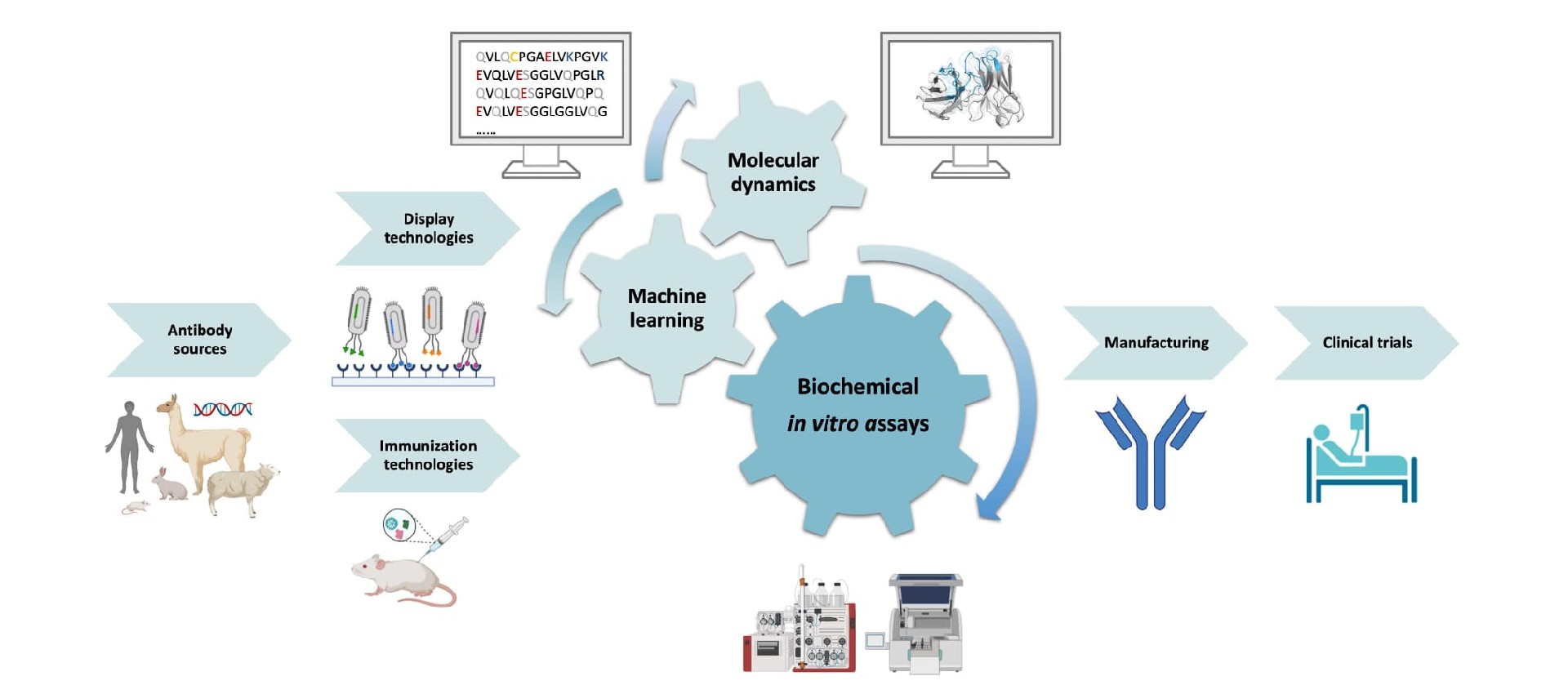
Antibody discovery is shifting from generating limited numbers of candidates to evaluating thousands of molecules through automated, data-centered workflows.
As candidate volume increases, the primary challenge becomes selecting which antibodies should advance and which should be deprioritized.
These decisions require consistent experimental data rather than sequence generation alone.
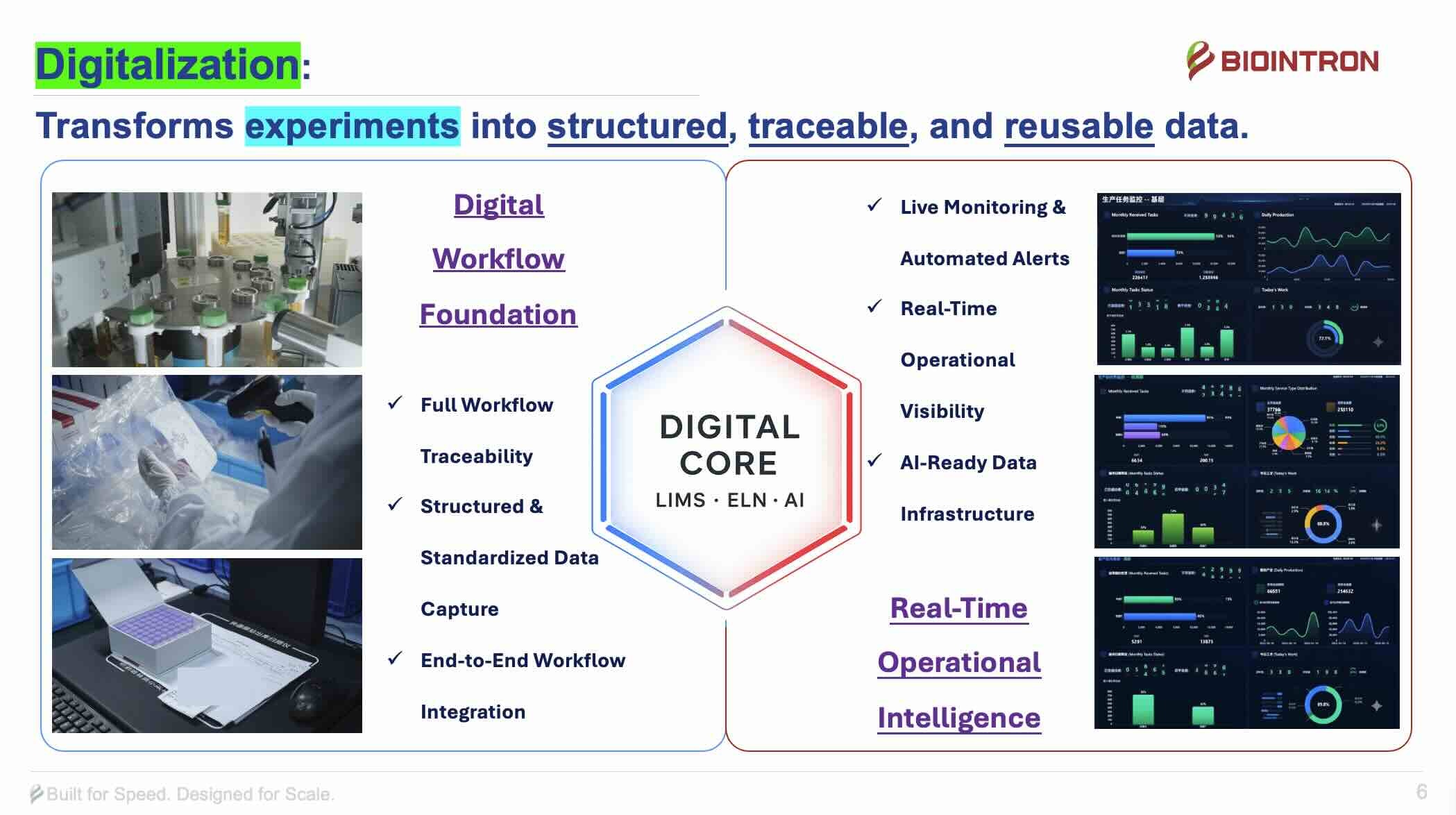
RushData addresses this need as a high-throughput platform that converts antibody sequences into structured experimental datasets. The workflow begins with sequence collection, DNA synthesis, and plasmid construction, followed by one-day CHO expression. Rapid screening can process up to 3,000 antibodies per batch, with supernatant-level titer and binding measurements generated by bio-layer interferometry. The presentation described a workflow for supernatant and BLI data, while purified-antibody workflows can include concentration, non-reduced capillary gel electrophoresis, SPR-based affinity characterization, and developability assessment.
The presentation also highlighted Biointron’s digital workflow infrastructure, including full sample traceability, standardized data capture, automated monitoring, and integration across experimental stages. Results can be delivered as scientist-facing reports, assay results, QC documentation, raw measurements, and machine-readable datasets. API, secure-transfer, and cloud-access options were also presented for integration with computational discovery platforms.
In conclusion, AI-assisted discovery does not reduce the requirement for experimental testing. Instead, larger numbers of computationally proposed antibodies increase the demand for rapid, standardized, and scalable wet-lab data. RushData is designed to meet this requirement by supporting repeated design–build–test–learn cycles and providing the experimental evidence needed for antibody selection and model refinement.
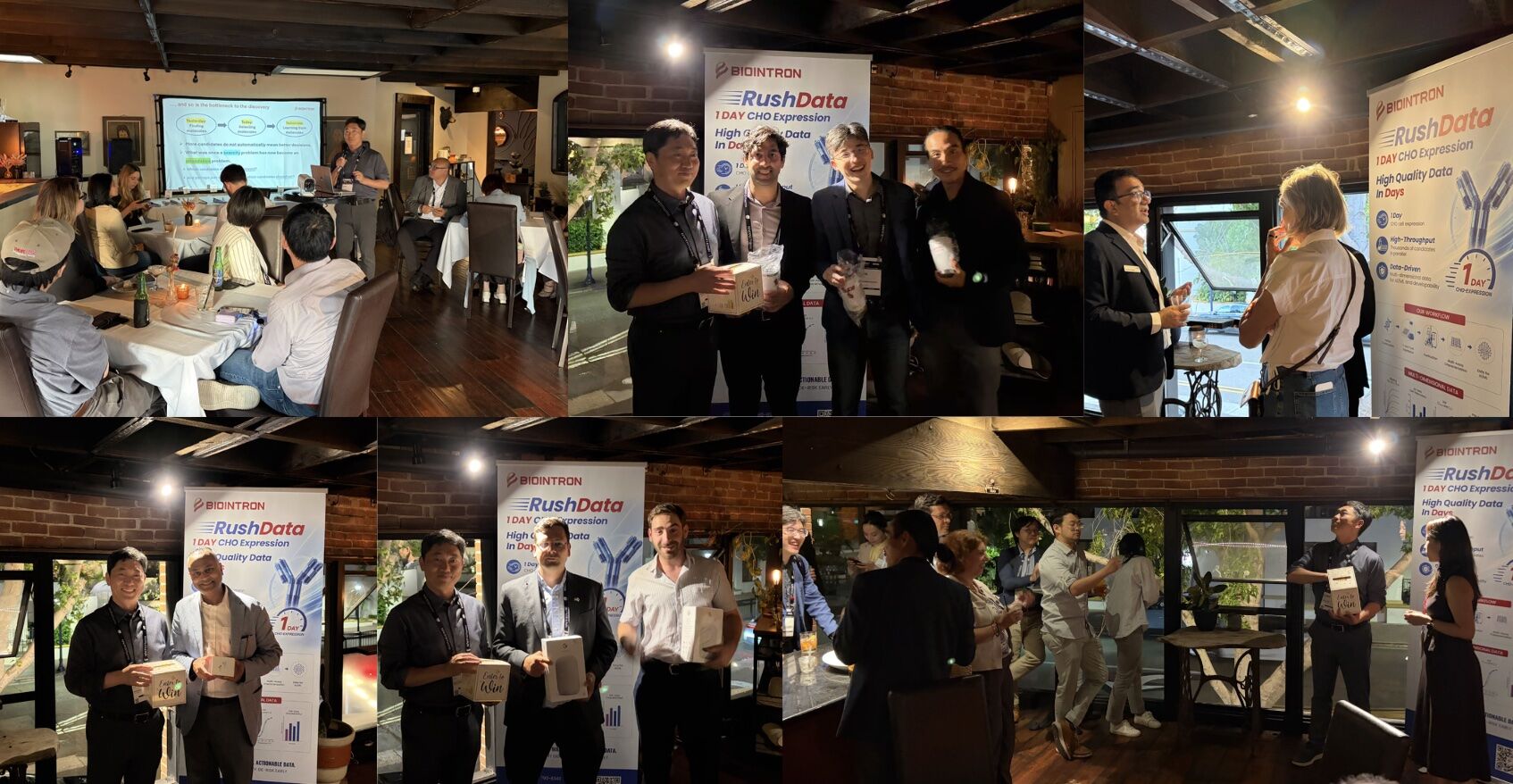
During and after the presentation, guests continued the conversation over drinks and a generous spread from The Lion’s Share. The menu featured venison sliders, Wagyu steak bites, cheese and charcuterie boards, ahi poke, curry chicken lettuce cups, duck confit tostadas, and an open bar.
With the formal program complete, the reception settled into an easy rhythm of introductions, reunions, and conversations across the antibody research and biotechnology community. Guests exchanged ideas, discussed current projects, and made new connections in a relaxed setting away from the conference floor.
The evening concluded with a raffle, where several lucky attendees took home AirPods Pro 3, Google Audio Bluetooth speakers, and YETI tumblers.
Thank you to everyone who joined us at The Lion’s Share and helped make the BIO 2026 reception such an enjoyable evening.
For an antibody candidate, strong target binding is only part of the path toward……
Explore VHH-based biosensors for high-sensitivity detection using nanobodies in ……
Explore how VHH antibodies stabilize protein conformations for crystallography, ……