


In recent decades, the landscape of therapeutic antibodies has undergone a rapid evolution, catalyzing breakthroughs in modern medicine. These antibodies, characterized by their precise targeting and minimal side effects, have reshaped treatment approaches across various medical domains. From monospecific human antibodies like avelumab for Merkel cell carcinoma, to bispecific murine antibodies like blinatumomab for acute lymphoblastic leukemia, therapeutic antibodies are highly valuable in treating cancer, given the unique ability of antibodies to directly target tumor cells while concurrently eliciting enduring anti-tumor immune responses.
Just this week, the FDA approved Opdivo (nivolumab, a monoclonal antibody) in combination with the chemotherapies cisplatin and gemcitabine for first-line treatment of adult patients with unresectable or metastatic urothelial carcinoma. Nivolumab is an IgG4 antibody that causes immune checkpoint blockade by diminishing inhibitory signaling through the programmed death receptor-1 pathway.
Also this week, an insightful review by Klein et al. describes the present and future of bispecific antibodies for cancer therapy, including bsAb-mediated dual modulators of signalling pathways, tumour-targeted receptor agonists, bsAb-drug conjugates, bispecific T cell, natural killer cell and innate immune cell engagers, and bispecific checkpoint inhibitors and co-stimulators. The next-generation bsAbs also being researched include trispecifics, bsAb prodrugs, bsAbs that induce degradation of tumour targets and bsAbs acting as cytokine mimetics.
Besides mAbs and bsAbs, antibody-drug conjugates (ADCs), are still hot in research. Last month, two reviews were published focusing on ADCs against breast cancer. The review by Zimmerman et al. focuses on HER2-targeted ADCs for breast cancer, as HER2 is amplified or overexpressed in about 20% of breast cancer cases. Since patients can often be resistant to treatment with chemotherapy in combination with mAbs like trastuzumab and pertuzumab, ADCs may represent a better-tolerated and more effective therapeutic.
Meanwhile, the review by Monteiro et al. provides an in-depth analysis of the clinical data on ADCs, particularly on pivotal clinical trials that assess the efficacy of ADCs in diverse breast cancer settings. Most interestingly, the future outlook includes personalized ADCs, involving tailored combinations of antibodies, linkers, and payloads based on individual patient tumor antigens and other characteristics to overcome resistance mechanisms.
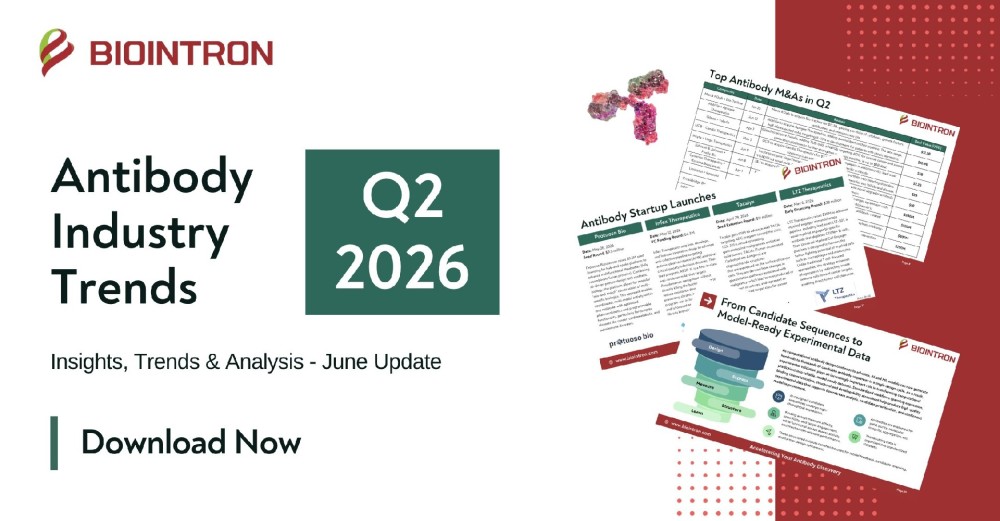
Biointron’s Q2 2026 Antibody Industry Trends report aims to explore the events a……
Biointron’s Q1 2026 Antibody Industry Trends report aims to explore the events a……
Biointron’s Q2 2025 antibody industry report aims to explore the events and tren……
Biointron’s Q1 2025 annual antibody report aims to explore the events and trends……