



Monoclonal antibodies (mAbs) are an established class of biopharmaceuticals, with applications spanning oncology, autoimmune diseases, and infectious diseases. As antibody therapeutics become increasingly diverse, attention to molecular heterogeneity is important for understanding their biological activity, stability, and manufacturability.
Antibody isotypes and isoforms describe different terms in antibody diversity. Isotypes refer to immunoglobulin classes, such as IgG and IgA, while subclasses include IgG1, IgG2, IgG3, and IgG4. Isoforms, in the biopharmaceutical context, generally refer to molecular variants of an antibody arising from structural differences or post-translational modifications.
Most approved therapeutic mAbs belong to the IgG class, which typically consists of two heavy and two light chains with a molecular mass of approximately 150 kDa. Despite their similar overall structures, IgG subclasses differ in hinge-region flexibility, disulfide bonding, Fc receptor interactions, and complement activation.
A 2026 review published in Antibody Therapeutics takes a look at how these differences influence antibody-mediated immune responses, particularly in cancer immunotherapy. IgG1 and IgG3 generally exhibit stronger Fc-mediated effector functions, whereas IgG2 and IgG4 are often considered for applications where reduced effector activity is desirable.
The review also highlights experimental findings involving anti-CD20 rituximab variants. In two-dimensional and three-dimensional B-cell lymphoma models, IgG3 variants demonstrated greater complement-dependent cytotoxicity (CDC) and antibody-dependent cellular phagocytosis (ADCP) than several other tested subclasses.
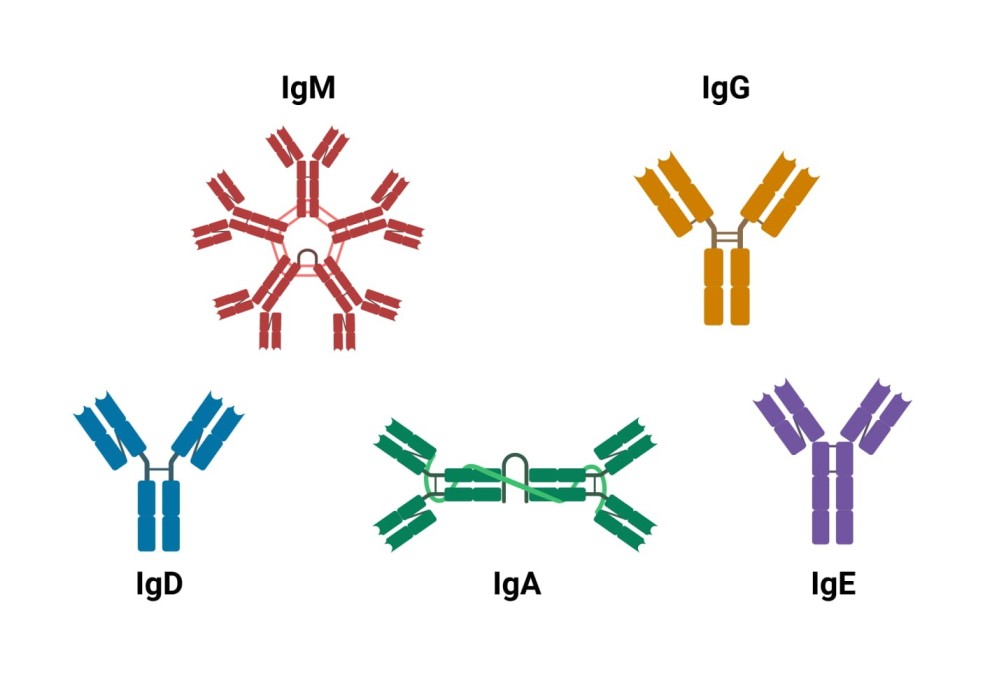
Beyond isotype and subclass differences, therapeutic antibodies can exhibit molecular heterogeneity within a single manufactured product.
Common sources of antibody isoform variation include glycosylation differences, deamidation, oxidation, C-terminal lysine processing, and disulfide bond rearrangements. These modifications may generate charge or structural variants with different physicochemical properties.
Depending on their nature and abundance, these variants can influence antibody conformation, solubility, aggregation propensity, stability, and biological activity. Their effects are molecule-specific, and not every detectable isoform has a meaningful impact on product quality or therapeutic performance.
This heterogeneity also presents challenges during downstream processing. Differences in surface charge and hydrophobicity can affect protein-protein and protein-membrane interactions, potentially contributing to aggregation, membrane fouling, or changes in filtration performance under certain processing conditions. Thus, isoform characterization is an important component of therapeutic antibody development and manufacturing control.
Analytical techniques are increasingly used to characterize antibody heterogeneity throughout development and manufacturing. Methods such as ion-exchange chromatography, capillary electrophoresis, mass spectrometry, and size-exclusion chromatography provide complementary information about charge variants, molecular modifications, and aggregation.
Process analytical technology (PAT) further supports manufacturing by enabling more systematic monitoring and control of process parameters and relevant quality attributes. These approaches can help manufacturers assess product consistency and identify process conditions associated with changes in antibody quality.
As therapeutic antibody formats become more complex, integrating molecular characterization with functional testing remains essential. Understanding how structural variations influence antibody activity, stability, and developability can help researchers make more informed decisions during candidate selection and optimization.
Access to reliable experimental data is particularly important for evaluating these properties, especially as computational approaches become more widely used in antibody discovery. Biointron's RushDATA™ service supports this need by providing rapid wet-lab experimental data for antibody candidates, helping researchers evaluate designed antibodies and guide subsequent development decisions.
Biointron's Q3 2026 Antibody Industry Trends report aims to explore the events a……
Biointron’s Q2 2026 Antibody Industry Trends report aims to explore the events a……
Biointron’s Q1 2026 Antibody Industry Trends report aims to explore the events a……
Biointron’s Q2 2025 antibody industry report aims to explore the events and tren……