



Polyclonal antibodies (pAbs) are a heterogeneous mix of antibodies produced by different B cell clones in response to an antigen. Unlike monoclonal antibodies (mAbs), which recognize a single epitope, polyclonal antibodies target multiple epitopes on the same antigen.
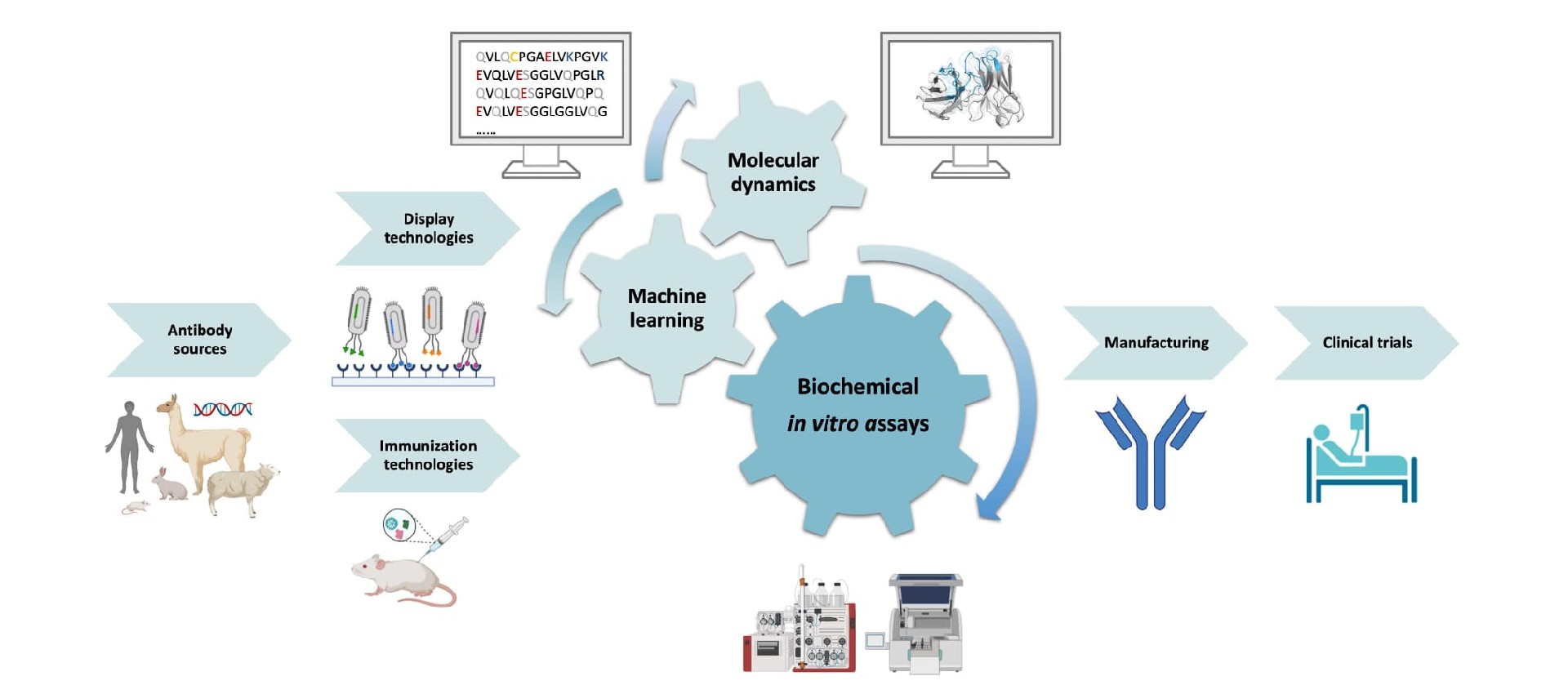
The production of pAbs involves the immunization of host animals, such as rabbits, goats, or sheep, with a specific antigen. The steps include:
Antigen Preparation: The quality and quantity of the antigen are critical for successful antibody production. Affinity purification reduces cross-reactivity with impurities.
Selection of Host Animals: The choice of species depends on the amount of antibody needed and the desired specificity.
Immunization: Animals are injected with the antigen, often combined with adjuvants to enhance the immune response. Booster injections follow to maintain high antibody titers.
Antiserum Collection: After sufficient antibody production, blood is collected, and the antiserum is processed to isolate polyclonal antibodies.
Purification: Affinity chromatography or protein A/G purification is used to improve specificity and reduce contaminants.
Enzyme-Linked Immunosorbent Assay (ELISA): pAbs detect multiple antigen epitopes, enhancing sensitivity.
Western Blot: Used for protein detection due to their ability to recognize denatured and native proteins.
Immunohistochemistry (IHC): Identify target antigens in tissue sections.
Serological Tests: Detect infectious agents or disease biomarkers.
Rapid Diagnostic Kits: Essential in lateral flow assays for conditions like pregnancy or infectious diseases.
Antivenom Production: Neutralize toxins from snake bites or scorpion stings.
Infectious Disease Treatment: pAbs can bind and neutralize viruses or bacteria.
Anti-Tumor Therapy: Used in immunotherapy to mediate effector functions like cancer cell apoptosis.
Related: Characteristics of Polyclonal Antibodies
Cost-Effective: Lower production costs and faster timelines compared to monoclonal antibodies.
High Sensitivity: Multi-epitope recognition ensures robust detection.
Versatility: Effective in detecting antigens with minor variations, such as mutated proteins or viral strains.
Stability: Retain function across a wide range of pH and salt concentrations.
Batch Variability: As pAbs are produced in vivo, their quality depends on the immune response of individual animals, leading to potential inconsistencies between batches.
Lower Specificity: Multi-epitope targeting increases the risk of cross-reactivity and false positives.
Finite Supply: Production depends on the lifespan of the host animal, requiring re-immunization and new animals to maintain supply.
At Biointron, we are dedicated to accelerating antibody discovery, optimization, and production. Our team of experts can provide customized solutions that meet your specific research needs, including HTP Recombinant Antibody Production, Bispecific Antibody Production, Large Scale Antibody Production, and Afucosylated Antibody Expression. Contact us to learn more about our services and how we can help accelerate your research and drug development projects.
For an antibody candidate, strong target binding is only part of the path toward……
Explore VHH-based biosensors for high-sensitivity detection using nanobodies in ……
Biointron’s Antibodies After Hours: BIO 2026 Reception was held at The Lion's Sh……
Explore how VHH antibodies stabilize protein conformations for crystallography, ……