


Recent work in antibody-cytokine fusion proteins reflects a clear engineering objective: retain the immunostimulatory capacity of cytokines while reducing systemic toxicities associated with non-restricted receptor engagement. Cytokines such as IL-2, IL-12, IL-15, and IL-21 are potent immune signaling proteins that activate T cells and natural killer (NK) cells. However, when administered systemically, they bind to receptors that are broadly expressed across multiple immune and non-immune cell types. This widespread receptor engagement can lead to severe inflammatory toxicities, limiting the doses that can be safely administered.
Antibody-cytokine fusion proteins are designed to address this challenge by physically linking a cytokine to an antibody that targets a defined cell type or tissue compartment. The goal is not to increase cytokine potency, but to restrict where and to which cells the cytokine signal is delivered. Across oncology and infectious disease models, emerging strategies converge on one central principle: spatially restricted cytokine activity to improve the therapeutic index.
The studies reviewed here highlight three designs:
Cis-targeted cytokine delivery
Multicytokine fusion architectures with defined signaling geometry
Tumor- or pathogen-localized cytokine sequestration
Together, these approaches aim to improve the therapeutic index by confining cytokine signaling to defined cellular or tissue contexts.
A recent review describes “cis-targeting” as a strategy to deliver cytokines to specific T cell populations, thereby enhancing anti-tumor responses while mitigating systemic toxicity.
Common γ-chain cytokines (IL-2, IL-7, IL-15, IL-21) share receptor subunits and activate JAK1/3 with downstream STAT1/3/5 signaling. Because these receptors are broadly expressed across immune and non-immune compartments, systemic administration results in widespread receptor engagement and dose-limiting toxicities.
Cis-targeted immunocytokines are engineered to:
Bind a defined immune subset through an antibody targeting domain
Deliver cytokine signaling preferentially to the antibody-bound cell
Reduce activation of bystander cell populations
This spatial coupling of antibody engagement and cytokine signaling increases functional selectivity without altering the intrinsic cytokine biology. The approach is therefore not based on increasing potency, but on restricting receptor engagement to defined cellular contexts.

Meanwhile, researchers from the University of Stuttgart evaluated trifunctional antibody-cytokine fusion proteins combining IL-15 with IL-7 or IL-21 in tumor-targeted constructs.
Key mechanistic observations include:
Cytokine positioning (N- and C-terminal vs. serial arrangement) significantly alters functional output.
scFv-based central antibody formats showed enhanced activity when bound to target cells.
Cooperative cytokine effects were more pronounced under target-bound conditions.
Enhanced activation of JAK–STAT pathways was observed when cytokines were colocalized at the tumor cell surface.
Importantly, IL-15/IL-21 constructs enhanced IFNγ production and cytotoxic potential, whereas IL-15/IL-7 constructs preferentially enhanced proliferation of naïve T cells.
These findings demonstrate that molecular architecture directly influences downstream STAT pathway activation and immune polarization. Cytokine synergy is therefore structurally dependent.
Murad et al. engineered CAR-T cells to secrete αPD-L1–IL-12 fusion proteins in solid tumor models. The design rationale leverages inducible PD-L1 expression in the tumor microenvironment:
CAR-T activation induces IFNγ.
IFNγ upregulates PD-L1 expression on tumor cells.
The αPD-L1–IL-12 fusion binds PD-L1, localizing IL-12 within the tumor microenvironment.
Compared to CAR-T cells secreting IL-12 alone or non-binding controls, PD-L1–anchored IL-12:
Increased intratumoral IFNγ levels
Enhanced CAR-T infiltration
Improved tumor control
Reduced systemic inflammation-associated toxicities
The study demonstrates that checkpoint ligands can function not only as inhibitory targets but also as spatial anchors for cytokine localization.

Another recent review highlights cytokine immunocomplexes and fusion proteins designed to improve half-life, biodistribution, and immune subset selectivity, particularly for IL-2, IL-7, and IL-15. Key challenges addressed include short serum half-life, uneven biodistribution, pleiotropic receptor engagement, and severe toxicities at high doses.
Engineering strategies include:
Antibody-cytokine complexes that bias receptor engagement
Fusion proteins that favor intermediate-affinity IL-2R signaling (CD122/CD132) over high-affinity CD25-containing complexes
Targeted constructs that enhance CD8⁺ T cell and NK cell activation
The emphasis across these approaches is controlled receptor topology engagement rather than maximal signaling intensity.

Although primarily focused on oncology, spatially restricted cytokine biology is also being applied to infectious disease.
Wei et al. identified reduced neutrophil recruitment and diminished CXCL pathway signaling in Acanthamoeba keratitis using single-cell transcriptomics. To restore neutrophil recruitment, the authors engineered a nanobody-CXCL1 fusion protein targeting Acanthamoeba. This study reinforces that antibody-directed cytokine or chemokine localization can correct deficient immune microenvironments beyond oncology.
In the studies discussed here, antibodies serve primarily to localize cytokines to defined cellular or tissue contexts. By linking cytokines to targeting domains directed against immune subsets, tumor-associated ligands, or pathogen surfaces, these constructs restrict where cytokine receptor engagement occurs.
Within these examples, the antibody format and its structural arrangement influence how the cytokine is positioned relative to its receptor, which in turn affects signaling outcomes. These reports therefore illustrate how antibody design can shape the context of cytokine activity without altering the intrinsic biology of the cytokine itself.
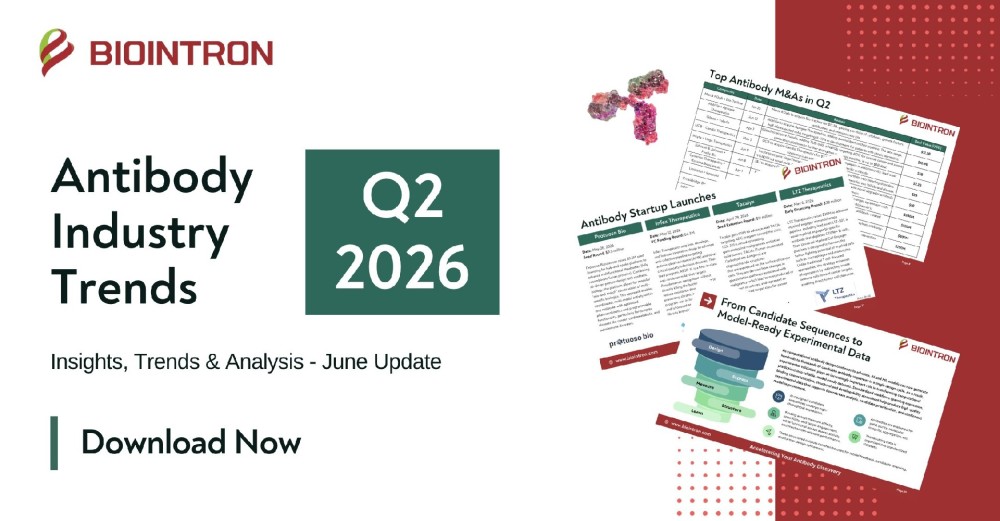
Biointron’s Q2 2026 Antibody Industry Trends report aims to explore the events a……
Biointron’s Q1 2026 Antibody Industry Trends report aims to explore the events a……
Biointron’s Q2 2025 antibody industry report aims to explore the events and tren……
Biointron’s Q1 2025 annual antibody report aims to explore the events and trends……